MyDNACompleteby Antares Genomics
Whole genome sequencing

Your code of life. The complete picture.

A Whole Genome Sequence serves as a permanent, comprehensive genetic resource that can be re-analysed over your entire lifetime informing your present and future medical decisions.

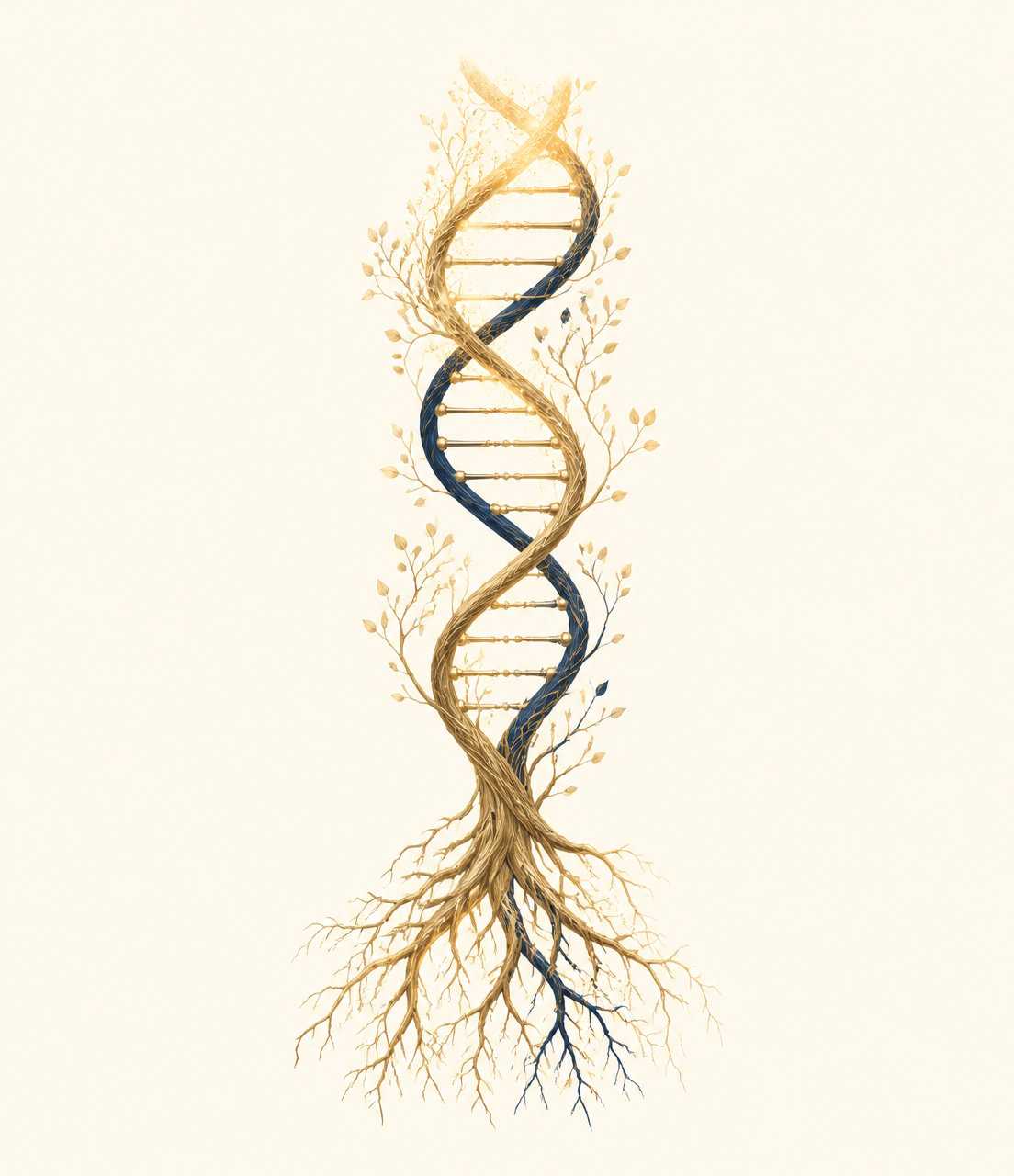
A golden DNA double helix growing from branching roots

3.2 billion base pairs.

Every single one read.

A whole Genome is

A book, 3.2 billion letters long — and you were born carrying it.

While standard genetic chips only test for a fixed checklist of known variants, Whole Genome Sequencing unlocks your entire genetic blueprint. Our WGS technology sequences 100% of your DNA—including the 98% of the genome lying outside the exome. This non-coding region acts as your body's genetic control panel, and it is where today's most vital health and wellness discoveries are being made.

01

Everything, not a sample of it

Chip tests and panels read markers chosen in advance — they can only find what they look for. Sequencing reads every position, including the 98% of the genome that lies outside the genes, where much of today's new discovery is happening.

02

Clinical-grade depth

Each position of your DNA is read dozens of times over, so a real variant is distinguished from instrument noise. That read depth is the standard clinical diagnosis depends on.

03

It never needs repeating

You share 99.9% of your DNA with every other person — the differences sit in roughly 4 to 5 million variants that are yours alone. They don't change over your lifetime, so neither does your data.

How it compares

How much of your DNA
does each test read?

These all get called a DNA test. They read very different amounts, because each was built to answer a different question.

The testOf your DNA
DNA chip tests<0.1%
Gene panels~0.3%
Exome sequencing~1.8%
Whole genome sequencing~100%

Percentages refer to the approximate proportion of the genome sequenced or analysed. Less than 0.1% is a glimpse. MyDNAComplete is the whole picture.

Why one test, once

The diagnostic odyssey ends here.

Traditional healthcare is reactive. When symptoms are complex, patients are sent down a fragmented "diagnostic odyssey" — sequential single-gene tests ordered one after another, each blind to everything outside its narrow panel. Whole Genome Sequencing replaces that chain with a single, exhaustive blueprint of ~100% of your DNA — including the 98% of the genome that targeted panels never examine.

01

Rare diseases aren't rare

There are over 6,000 clinically defined rare diseases, and roughly 72% have a direct genetic origin. Collectively they affect an estimated 300 million people worldwide — about 1 in 17 of us.[8]

02

Every variant, one pass

Because WGS reads all 3 billion base pairs, it can cross-reference millions of variants against known disease databases in a single run — screening thousands of conditions concurrently, not one test at a time.[2][3]

03

One test, lifelong value

Used as a first-tier benchmark, WGS dramatically increases diagnostic success, improves drug-safety decisions, and saves the cost of repeated testing — no new sample, no new bill, each time a new question arises.[2]

What it changes

From a guessing game to a definitive map.

Traditional diagnosis is a step-by-step guessing game — doctors order single-gene tests one after another, hoping to land on the right one. It's slow, expensive, and often ends in a dead end. WGS reads the entire book of your DNA at once, so the answers are already there.

Rare & undiagnosed disorders

  • Developmental delays

    Causes for unexplained slow growth, intellectual disability, or autism spectrum traits.

  • Neurological conditions

    Mutations linked to severe epilepsy, brain abnormalities, and muscular dystrophies.

  • Congenital anomalies

    Structural birth defects and multi-system organ issues in newborns or fetuses.

[2][3]

Inherited single-gene diseases

  • Cystic fibrosis

    A severe lung and digestive disorder caused by specific gene deletions or variants.

  • Hemophilia & sickle cell anemia

    Inherited blood disorders affecting clotting or red blood cells.

  • Marfan syndrome & familial hypercholesterolemia

    Connective-tissue and cholesterol-processing conditions.

[2]

Cancers & oncology

  • Blood cancers

    Helps classify and risk-stratify complex leukemias like acute myeloid leukemia to guide precise therapies.

  • Solid tumors & sarcomas

    Identifies somatic mutations, structural changes, and therapy targets within tumor DNA.

The clinically actionable genes

The genes doctors act on
the moment they are found.

The American College of Medical Genetics and Genomics maintains a list — ACMG SF v3.2, now over 80 genes — of variants so penetrant and so treatable that laboratories are directed to report them proactively, in any patient.[6][7] The rule is simple: if a mutation is found, the disease is highly likely — and a proven intervention exists if it is caught early.

Hereditary cancer syndromes

Knowing enables aggressive early surveillance — MRIs and colonoscopies — or preventative surgical management, proven to save lives when started early.

  • BRCA1 · BRCA2 · PALB2

    Hereditary breast and ovarian cancer

  • MLH1 · MSH2 · MSH6 · PMS2

    Lynch syndrome — colorectal and uterine cancers

  • APC

    Familial adenomatous polyposis

  • TP53

    Li-Fraumeni syndrome

  • PTEN

    PTEN hamartoma tumour syndrome

  • VHL · RET · STK11

    Von Hippel-Lindau, MEN2, Peutz-Jeghers

Cardiovascular disorders

A finding directs clinicians to beta-blockers, lifestyle modification or implantable defibrillators — preventing sudden cardiac arrest in people who feel perfectly well.

  • LDLR · APOB · PCSK9

    Familial hypercholesterolaemia — early heart attacks, highly treatable

  • FBN1 · TGFBR1 · TGFBR2

    Hereditary thoracic aortic aneurysms, incl. Marfan syndrome

  • MYBPC3 · MYH7 · TNNT2

    Hypertrophic cardiomyopathy

  • KCNQ1 · KCNH2 · SCN5A

    Long QT syndrome

  • RYR2 · CASQ2

    Catecholaminergic polymorphic ventricular tachycardia

  • PKP2 · DSP · DSG2

    Arrhythmogenic right ventricular cardiomyopathy

Metabolic & other treatable conditions

Early intervention — diet control, chelating agents, enzyme therapy or a simple anaesthetic swap — halts organ damage that would otherwise accumulate silently.

  • ATP7B

    Wilson disease — copper overload, manageable with chelation

  • HFE

    Hereditary haemochromatosis — iron overload, managed by phlebotomy

  • GAA

    Pompe disease — enzyme therapy exists

  • RYR1 · CACNA1S

    Malignant hyperthermia — a fatal reaction to standard anaesthesia, avoidable if known

  • HNF1A

    Maturity-onset diabetes of the young

  • RPE65

    Inherited retinal disease — eligible for targeted gene therapy

A selection from the ACMG SF v3.2 list, grouped by condition — not exhaustive. MyDNAComplete reads every gene on the list, completely, including the regions standard panels miss.[6][7]
Sequenced once · Read for life

Your genome doesn't change.
What we can read in it does.

In published studies, re-analysing stored genome data has solved cases years after the first report[4] — variants are reclassified as the evidence base grows, and the same sequence keeps yielding new answers. That is what makes this the one health test you never need to buy twice.

Questions, answered

A decision this complete deserves clarity.

Your genetic data is deeply personal. We treat it that way — from sample handling to the way your results are shared.

Your privacy is part of the promise.